Twins Separated at Birth January 30, 2006
I saw a video of a preacher lady which triggered a recollection of Steve Ballmer. Other than Steve working at Microsoft, these videos really having nothing to do with business, but enjoy them anyways. I guess you could label them as "what not to do in business presentations".
And may I add, "you need a holy ghost enima right up your rear end" is my quote for 2006 so far. Enjoy them.
(Click image or here to launch video)
(Click image or here to launch video)
The 3 Best Flashes I’ve Seen Since I Watched that “Late Night” Movie January 28, 2006
The new Swedish Heinz site is one of the three best flash sites I’ve seen in many years. A minimalistic beauty.
This site is for Leo Burnett here in Toronto and is recognized as one of the best ad agency sites of all time. It went live last year but still deserves plenty of attention.
And this last one is my absolute favourite website of all-time. They just updated it with new scenarios. I told everyone I know about this site and now I’m telling all of you. It’s for Ikea in Europe. Not sure which country. I will warn you that if you don’t have broadband it could take several minutes to load. But the wait’s worth every second. If I had an award named after me it would be given to this site, hands-down. This is truly what marketing is. This is how you tell a story.
Imagination Does A Business Good January 27, 2006
I was lurking around entrepreneur.com and found this interesting article by Al Lautenslager who’s a guerrilla marketing coach. The article talks about using your imagination to create a good marketing campaign, Al says "A successful guerrilla marketing campaign takes effort, not cash." So read up and I hope you enjoy the article like I did.
Guerrilla marketing is often described as marketing using time, energy, imagination and information vs. your hard-earned profits. One of the key words in this definition is the word "imagination." I run across many people that hear the many stories about guerrilla tactics, and they always say "What a great imagination…That must be guerrilla marketing." To guerrilla marketers, that’s music to their ears.
Using your imagination doesn’t cost anything. True, it costs you a lot of time, blood, sweat and tears to get you to the point of being able to use your imagination based on your education and experiences, but no money is taken out of your checking account to pay for an imaginative idea.
Webster defines imagination as: "The ability to confront and deal with reality by using the creative power of the mind; resourcefulness; an unrealistic idea or notion; a fancy; a plan or scheme." Let’s look at some unrealistic ideas or schemes that were hatched by a little bit of imagination:
- I passed a realtor’s sign the other day, and the agent’s name was Lester. His website was www.lesterthelister.com. Sounds kind of corny, but it will get noticed, and people will remember it.
- Henderson’s Appliance Store in St. Louis was in business for more than 40 years and needed some revitalization. They had never had a tag line. Since they sold refrigerators, grills, washers and dryers, they dug deep on how they could convey to the marketplace what they really do. The resulting tag line now used in all their marketing is: "We cook it, we chill it, we clean it."
- Here’s one any company can use. Imagine (there’s that word again) passing out fliers for your local high school football team’s game with "Go Wildcats" (or whatever their mascot is) on one side. Can you imagine every fan standing up cheering and waving their free flier? On the reverse side, your logo and phone number appears. Every time the flier is displayed, the fan stares right at your company information. Sure, you have to pay to get the fliers printed, but in the total scheme of things, imagination is what generated awareness for the business on the reverse side. That’s guerrilla marketing.
Sometimes imagination leads to outrageousness. That’s OK. That’s what gets noticed, and that’s what gets remembered. Best of all-and consistent with guerrilla marketing-it usually doesn’t cost a whole lot. Imagine (yes, I repeated it on purpose) a mailing that comes as a bank money bag, a printed paper bag or the lumpy mail pack that has a silver platter in it with a sales letter to correspond. These are all low-cost tactics that a customer and prospect will see and eventually act upon or remember.
As you can see, a creative idea can go a long way. People many times will talk about the cool idea more than the product, but of course the product is always mentioned. It’s almost like people go around saying, "I wish I would have thought of that," and they start thinking of imaginative ideas for their products or services.
Brainstorm how you can use your imagination to market your product or service. As they say with anything related to your imagination, "You are only limited by your imagination."
Imagination doesn’t cost anything; that’s one of the primary components of guerrilla marketing. Imagination is one of those things that can make your marketing fun. Involve others. Involve customers and prospects. Break out of your typical mode of doing business. That will definitely get you noticed.
Put some energy and enthusiasm behind your idea, and you’ll soon have your market talking about your imagination and, eventually, your products and services.
Click here if you wish to read the original article
Another Piece of Fine Art
Guy Kawasaki’s written about the art of everything from vc funding to today’s subject, bootstrapping. Which is a nice little way to tie into his book, The Art of the Start. He might not be seen as beautiful as Mona Lisa, but his writing sure is. Enjoy.
Someone once told me that the probability of an entrepreneur getting venture capital is the same as getting struck by lightning while standing at the bottom of a swimming pool on a sunny day. This may be too optimistic.
Let’s say that you can’t raise money for whatever reason: You’re not a “proven” team with “proven” technology in a “proven” market. Or, your company may simply not be a “VC deal”-that is, something that will go public or be acquired for a zillion dollars. Finally, your organization may be a not-for-product with a cause like the ministry or the environment. Does this mean you should give up? Not at all.
I could build a case that too much money is worse too little for most organizations-not that I wouldn’t like to run a Super Bowl commercial someday. Until that day comes, the key to success is bootstrapping. The term comes from the German legend of Baron Münchhausen pulling himself out of the sea by pulling on his own bootstraps. Here is the art of bootstrapping.
- Focus on cash flow, not profitability. The theory is that profits are the key to survival. If you could pay the bills with theories, this would be fine. The reality is that you pay bills with cash, so focus on cash flow. If you know you are going to bootstrap, you should start a business with a small up-front capital requirement, short sales cycles, short payment terms, and recurring revenue. It means passing up the big sale that take twelve months to close, deliver, and collect. Cash is not only king, it’s queen and prince too for a bootstrapper.
- Forecast from the bottom up. Most entrepreneurs do a top-down forecast: “There are 150 million cars in America. It sure seems reasonable that we can get a mere 1% of car owners to use install our satellite radio systems. That’s 1.5 million systems in the first year.” The bottom-up forecast goes like this: “We can open up ten installation facilities in the first year. On an average day, they can install ten systems. So our first year sales will be 10 facilities x 10 systems x 240 days = 24,000 satellite radio systems. 24,000 is a long way from the conservative 1.5 million systems in the top-down approach. Guess which number is more likely to happen.
- Ship, then test. I can feel the comments coming in already: How can you recommend shipping stuff that isn’t perfect? Blah blah blah. ”Perfect“ is the enemy of ”good enough.“ When your product or service is ”good enough,“ get it out because cash flows when you start shipping. Besides perfection doesn’t necessarily come with time-more unwanted features do. By shipping, you’ll also learn what your customers truly want you to fix. It’s definitely a tradeoff: your reputation versus cash flow, so you can’t ship pure crap. But you can’t wait for perfection either. (Nota bene: life science companies, please ignore this recommendation.)
- Forget the ”proven“ team. Proven teams are over-rated-especially when most people define proven teams as people who worked for a billion dollar company for the past ten years. These folks are accustomed to a certain lifestyle, and it’s not the bootstrapping lifestyle. Hire young, cheap, and hungry people. People with fast chips, but not necessarily a fully functional instruction set. Once you achieve significant cash flow, you can hire adult supervision. Until then, hire what you can afford and make them into great employees.
- Start as a service business. Let’s say that you ultimately want to be a software company: people download your software or you send them CDs, and they pay you. That’s a nice, clean business with a proven business model. However, until you finish the software, you could provide consulting and services based on your work-in-process software. This has two advantages: immediate revenue and true customer testing of your software. Once the software is field-tested and battle-hardened, flip the switch and become a product company.
- Focus on function, not form. Mea culpa: I love good ”form.“ MacBooks. Audis. Graf skates. Bauer sticks. Breitling watches. You name it. But bootstrappers focus on function, not form, when they are buying things. The function is computing, getting from point A to point B, skating, shooting, and knowing the time of day. These functions do not require the more expensive form that I like. All the chair has to do is hold your butt. It doesn’t have to look like it belongs in the Museum of Modern Art. Design great stuff, but buy cheap stuff.
- Pick your battles. Bootstrappers pick their battles. They don’t fight on all fronts because they cannot afford to fight on all fronts. If you were starting a new church, do you really need the $100,000 multimedia audio visual system? Or just a great message from the pulpit? If you’re creating a content web site based on the advertising model, do you have to write your own customer ad-serving software? I don’t think so.
- Understaff. Many entrepreneurs staff up for what could happen, best case. ”Our conservative (albeit top-down) forecast for first year satellite radio sales is 1.5 million units. We’d better create a 24 x 7 customer support center to handle this. Guess what? You sell no where near 1.5 million units, but you do have 200 people hired, trained, and sitting in a 50,000 square foot telemarketing center. Bootstrappers understaff knowing that all hell might break loose. But this would be, as we say in Silicon Valley, a “high quality problem.” Trust me, every venture capitalist fantasizes about an entrepreneur calling up and asking for additional capital because sales are exploding. Also trust me when I tell you that fantasies are fantasies because they seldom happen.
- Go direct. The optimal number of mouths (or hands) between a bootstrapper and her customer is zero. Sure, stores provide great customer reach, and wholesalers provide distribution. But God invented ecommerce so that you could sell direct and reap greater margins. And God was doubly smart because She knew that by going direct, you’d also learn more about your customer’s needs. Stores and wholesalers fill demand, they don’t create it. If you create enough demand, you can always get other organizations to fill it later. If you don’t create demand, all the distribution in the world will get you bupkis.
- Position against the leader. Don’t have the money to explain your story starting from scratch? Then don’t try. Instead position against the leader. Toyota introduced Lexus as good as a Mercedes but at half the price-Toyota didn’t have to explain what “good as a Mercedes” meant. How much do you think that saved them? “Cheap iPod” and “poor man’s Bose noise-cancelling headphones,” would work too.
- Take the “red pill.”This refers to the choice that Neo made in The Matrix. The red pill led to learning the whole truth. The blue pill meant waking up wondering if you had a bad dream. Bootstrappers don’t have the luxury to take the blue pill. They take the red pill-everyday-to find out how deep the rabbit hole really is. And the deepest rabbit hole for a bootstrapper is a simple calculation: Amount of cash divided by cash burn per month because this will tell you how much longer you can live. And as my friend Craig Johnson likes to say, “The leading cause of failure of startups is death, and death happens when you run out of money.” As long as you have money, you’re still in the game.
The original article can be found at Guy Kawasaki’s blog.
Come on Seven! Papa Needs a New Waterbed. January 26, 2006
We’ve all had those moments as entrepreneurs where we’ve just thought of a fantastic, ground shaking idea. Not only will people want your idea, they’ll need it too, just because it’s so damn good. And then something happens. That something is nothing. The big businessman upstairs decides to challenge you, so he hits the pause button. If you’ve ever attempted to create a new business you’ve experienced this freeze frame. It might have been during the planning phase, just before the big launch, or after the first month of nearly non-existent sales. This feeling is a fear of failure. The best thing I could advise to overcome this fear, while it reappears over and over throughout your entrepreneurial career, is to remember this classic statement:
“You can’t win if you don’t play.” – Originally said by some guy waiting in line to buy a scratch ticket
It’s one of the greatest support statements lottery retailers could have ever wished for their consumers to use as a justification for their addictive nature. Entrepreneurs are gamblers themselves who play in a business lottery risking something in hopes of hitting the jackpot. But the difference between the lottery and entrepreneurs is that you can control the odds. You can choose how many tickets you buy to get your business going, and the odds can greatly increase in your favour based upon the amount of effort you put into your business.
But to play the game of entrepreneurship you have to take a risk to overcome that fear of failure. You have to do something that makes you feel uncomfortable to conquer the situation and help you get to the next step in opening and operating your business.
Another quote that goes hand in hand with this metaphorical application is from Mark Cuban, and only because he’s the last person I can recall saying this common phrase. “You only have to be right once.” Both in business and the lottery you only need to have your chips on the right spot once to clean up the table. I should also add that if you play the game and don’t win your first, second, or third time you still have to remember that “you only have to be right once.” Grab whatever chips you have left, put them on a spot that you believe in, and do everything you can to ensure that the ball will stop on your number.
Speaking well takes a little practice
Do you ever find yourself at a loss for words? Or perhaps sometimes you know exactly what to say, but now how to say it? Do you have enough animation in your voice to keep peoples attention? If you say no to both of those questions there’s only one logical reason why: You’re lying.
With that said, here’s something that I do when I’m by myself, usually when I’m driving or sitting in my office, that gives me a little practice with vocabulary, speech, and thinking on my toes.
When I’m listening to a talk radio show I will repeat the hosts comments. I wait one or two words into the sentence and then start saying what he is saying, but with a moments lag. It takes a lot of concentration sometimes (depending on who you’re listening to) to keep up. It’s fairly easy to do if you just simply just copy the words, but try copying the tone of voice and well and this is where it gets interesting. You’ll mess up here and there, but it’s actually kind of fun and I really believe it helps me. People are all different and this may not help everyone, but I am the only person I know of who does it so I figured I’d share that with you.
Give it a try and post a comment to let me know how it went for ya!
Interactivity Isn’t Just Online
In another example of a beautiful baby being made from the sweet lovemaking of interactivity, creativity, and technology, I share with you the Infiniti Interactive Mirror. This great marketing tool is being deployed throughout the 2006 auto show season. Check the site out for many more pictures and a video of a hands-on demo, no pun intended.
Seth’s Rulebreakers, and Makers January 24, 2006
This a great post for everyone out there trying to jump on the bandwagon. Hopefully it’ll help you think twice. Courtesy of Seth Godin’s blog.
I’ve gotten more email about Alex Tew’s Million Dollar Homepage than almost any other specific topic, ever.
Most of the people who write believe:
a. they discovered it
b. I didn’t know about it
c. there was a big lesson to be learnedI hesitated to post about it, largely because I didn’t have a lot to add to the hooplah, unil I read Steve Yastrow’s post on tompeters!
The interesting ideas in a changing world are those that inform us about how to behave in the future. New rules are worth learning.
On the other hand, if someone breaks a rule in a way that can rarely be duplicated, we don’t learn a whole lot-unless there’s a pattern.
I think Alex brilliantly manipulated the current architecture of the web in order to earn a substantial profit. And he did earn it… his investment of cash and time was substantial.
When I see the 10,000 copycats out there, all I can do is sigh. Why do they believe this is a new trend? Why do they think it’s going to become an important part of the marketing mix, and are they really so naive to believe that they, and they alone, will earn even more than Alex did?
Yes, "? and the Mysterians" hat a hit song and wore masks, but that doesn’t mean that wearing a mask and naming yourself after a punctuation mark is a new rule.
I’m frequently reminded of the lemming gene in mankind when I clean out my spam box. A subject line will show up and within minutes, it will be copied by 100 other spammers. Because copying the new rule feels easier and safer and more profitable than inventing a new rule. And in the world of spam, it guess it probably is.
In this case, though, I don’t think you should quit your day job (Alex should, though, and apparently has).
Free Sales Outlets January 23, 2006
Most of you have already heard of one of these two sites I’m about to discuss. The first one is CraigsList (www.craigslist.com ). It started in San Francisco and grew to be a global phenomenon. You get to post classified ads in a variety of categories, upload photographs, and correspond via an anonymous E-mail address for FREE. It doesn’t cost a dime. Nada. Nothing. Zip.
Of course how is a small little guppy like that going to corner the entire market? Well, they had it pretty locked down for a while, until just recently. Guess who’s back, back again? GOOGLE.
That’s right, Google has now entered the market for free classified ads rivaling CraigsList. With a superior ad managing system, I think Google has a chance to come out on top. It’s going to take a bit of time and possibly some revision, but I’ve really enjoyed the interface and the ease of use. CraigsList has tried very hard to stay stupid-simple, but they may have overdone it. Check out the new Google Base product at http://base.google.com/
I still use both CraigsList and now recently Google Base for sales outlets. You can’t ever make your customers TOO aware of your product. Both of these sites work wonders for automotive sales leads.
Sign up and post a classified ad for your product/service (assuming you have one since you’re reading the YGG Blog). I’d love to get some feedback on it and see what you thought about it in comparison to CraigsList.
It’s Good to be Great
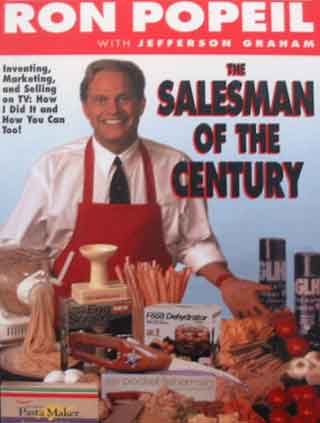
Fact of the Day:
Great products don’t have to tell you how great they are. Other people will.
Focus on making a great product before you think about how fantastic your advertising is going to be.
Note: The above image is an example of advertising, innovation, and creativity at it’s worst. And no, George Foreman did not pay me to post this.
| older posts »